



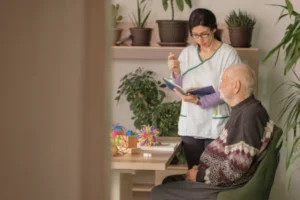

Bringing a loved one home after a hospital stay can feel overwhelming. While discharge often signals improvement, it also comes with new responsibilities, medications, and safety concerns.
Home care after hospital discharge helps bridge the gap between hospital care and everyday life, offering support that promotes recovery, comfort, and peace of mind.
Leaving the hospital is often a relief—but for many families, it’s also the moment when worry sets in. Suddenly, you’re responsible for care that nurses and doctors were handling just days before.
Knowing what to expect and when to seek help can make all the difference during this transition.
Hospital stays are structured and closely monitored. Once a loved one returns home, that structure disappears almost overnight.
Families often face challenges such as:
Managing new or complex medication schedules
Helping with mobility after surgery or illness
Monitoring for complications or setbacks
Preventing falls or accidents at home
Balancing care with work, family, and other responsibilities
Without proper support, these challenges can increase stress and even lead to hospital readmission.
Home care after hospital discharge provides non-medical, in-home support to help seniors recover safely and comfortably at home. Care is personalized based on the individual’s needs and often includes assistance with daily activities, safety supervision, and emotional support.
The goal is simple: help your loved one heal while giving your family confidence and breathing room.
Home care after hospital discharge can be especially helpful for seniors who:
Have had surgery or a recent fall
Are recovering from illness or infection
Have mobility limitations or weakness
Live alone or lack nearby family support
Have memory loss or cognitive changes
Are at risk of hospital readmission
Even short-term care can make a meaningful difference during recovery.
Even outside scheduled evaluations, watch for these indicators that the care plan may need an update:
Tasks are consistently missed or incomplete.
Your loved one shows frustration or discomfort with routines.
Safety risks increase at home.
New health issues arise.
There’s no one-size-fits-all answer. Some families need care for just a few days or weeks, while others discover that ongoing support improves safety and quality of life long-term.
A home care assessment can help determine:
How much support is needed
What times of day are most important
Whether care should be temporary or ongoing
Care plans can always be adjusted as recovery progresses.
Caring for a loved one after discharge often falls on adult children who are already juggling work, parenting, and other responsibilities.
Home care helps families by:
Reducing burnout and stress
Providing peace of mind when you can’t be there
Allowing family members to focus on connection, not tasks
Supporting better boundaries and balance
You don’t have to do everything alone.
If a hospital discharge is approaching, it’s helpful to start planning early.
Coordinating home care before your loved one returns home can create a smoother, safer transition and prevent last-minute stress.
If your family is preparing for a hospital discharge, or feeling overwhelmed after one, you don’t have to navigate this transition alone.
A home care assessment can help determine the right level of support so your loved one can recover safely at home, and you can breathe a little easier.
EXCELLENTTrustindex verifies that the original source of the review is Google. Monarch provided care for my wife (dementia) for two days while I had to travel. They were very responsive and the assistants were knowledgeable and caring. They kept me informed of everything that was going on. I am very pleased with Monarch and will use them again.Posted on GoogleTrustindex verifies that the original source of the review is Google. It has been a pleasure working with Monarch, very good communication, personal training, schedule adjustments. Would use in the future. MikePosted on GoogleTrustindex verifies that the original source of the review is Google. Juana had been excellent in her assistance in helping Dale in all respects that has helped.Posted on GoogleTrustindex verifies that the original source of the review is Google. We have absolutely been happy with the services. Most importantly is our loved one looks forward to her visits. Reporting and feedback are great!Posted on GoogleTrustindex verifies that the original source of the review is Google. Monarch Care provides outstanding service with genuine compassion and professionalism. The staff is attentive, respectful, and truly dedicated to the well-being of those they serve. Communication is excellent, and every team member goes above and beyond to create a supportive and trustworthy environment. I highly recommend Monarch Care to anyone seeking reliable, high-quality, and compassionate care.Posted on GoogleTrustindex verifies that the original source of the review is Google. We used monarch care for my papa who was on hospice. Juana was a wonderful caregiver and Alice was very communicative and addressed anything and everything we needed. We would use them again and highly recommend!Posted on GoogleTrustindex verifies that the original source of the review is Google. Maverick and his team are the best!! I needed someone to sit with my stepdad prior to a procedure then get him to it and they were on top of it. Maverick was kind, thorough, and very responsive. My stepdad complains abt everything and even he did not have one bad thing to say! Will definitely use them again in the future.Posted on GoogleTrustindex verifies that the original source of the review is Google. Maverick and his team do a great job providing care to seniors or anyone in need of a caregiver. They also offer an AI fall detection service for hours when a caregiver is not with them. Giving you a peace of mind any time!Posted on GoogleTrustindex verifies that the original source of the review is Google. There are not many people in the world who you can trust to care for your loved ones the way you do, but I can tell you that Alice is an exception to this by far! I have never known a more compassionate and loving human before Alice. I have known her since we were little girls and her faith and love for people only grows stronger with her life experience. She will care for your loved ones the way you will expect.Posted on GoogleTrustindex verifies that the original source of the review is Google. I have known the providers and Caregivers for 8 years, they are reliable and compassionate, excellent communication with family members, prompt responses to needs, professionalism in handling delicate situations and their ability to provide care plans with both the patients and as well as personalized employees who truly satisfy the individual's requirements, making them feel safe and comfortable as if they were at home. The truth is we were impressed with the exhaustive evaluation process that ensured our loved one received the appropriate level of care. MONARCH CARE caregivers are incredibly kind and patient, always going the extra mile to make our loved one feel cared for. They appreciate flexibility in each schedule and the ability to adjust care plans as needed. Sincerely: Dinora HernandezVerified by TrustindexTrustindex verified badge is the Universal Symbol of Trust. Only the greatest companies can get the verified badge who has a review score above 4.5, based on customer reviews over the past 12 months. Read more
© 2025 Monarch Care Co. | Serving The Woodlands, Cypress, Tomball, Spring, Conroe, Magnolia, Montgomery, and North Houston | 713-231-5288